Two homes.One plan you both see.
Handovers, holidays, doctor visits, forms. Famili keeps them in one place instead of scattered across messages.
What is open between two households in one week
What makes co-parenting hard day to day
It rarely breaks down over the custody schedule. It breaks down over everything around it: who packs what, who calls whom, where the form is. Those details travel by message and are unfindable two days later.
An appointment without context creates three follow-up questions.
What lives only in a chat cannot be found again later.
Clear ownership prevents more friction than any agreement.
The problem is not the plan. It is the handover.
Plans change, and the change reaches only one side.
The date is set, but the form and the contact are missing.
Organizing in a chat means searching for it again every time.
One place both households can see
Four areas where agreements turn into something that holds.
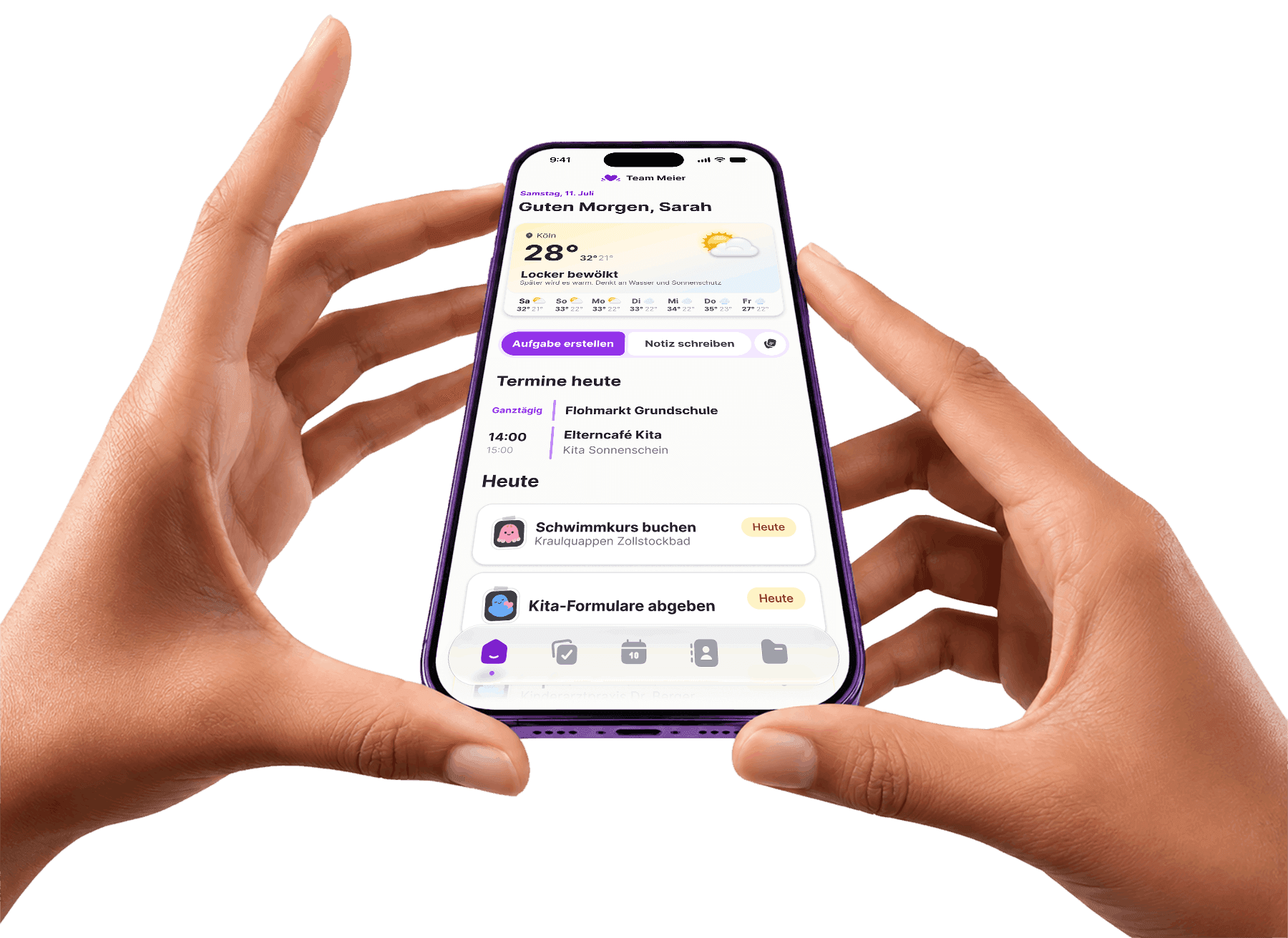

Both of you start on the same day
- Appointments, tasks, and notes in one view
- The other household sees what is happening today too
- No more morning calls to sync up

Who packs what comes with the task
- Every task carries a name, not an expectation
- Recurring handovers keep running on their own
- The other side sees what is done right away
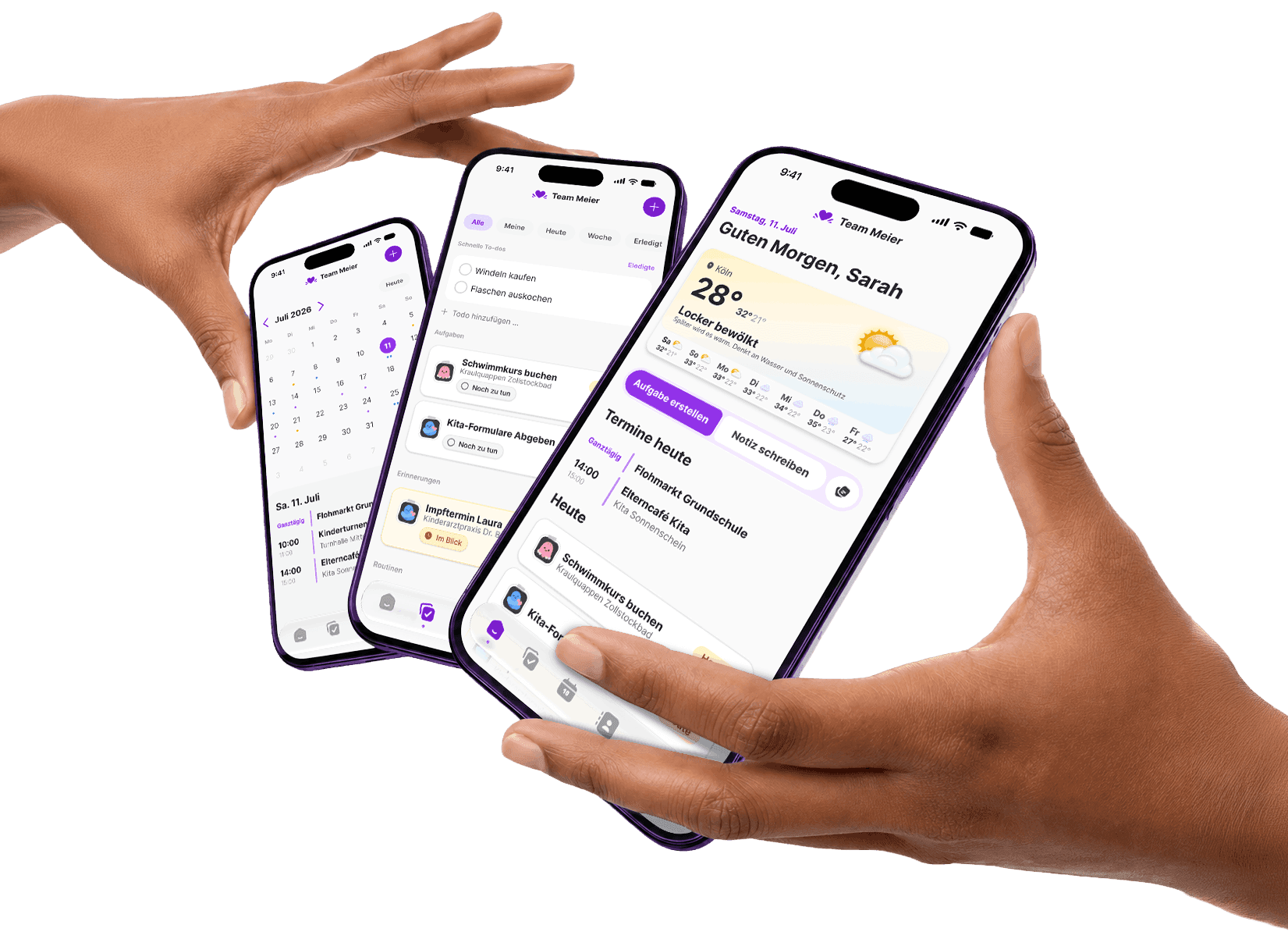
One calendar for both households
- School, childcare, doctors, and handovers in one place
- Changes reach both sides at the same time
- Context sits on the event, not in a chat thread
 Connect your existing Google calendars and they all come together in one shared family calendar.
Paperwork that is not just at one house
- Vaccination records, forms, and certificates for both
- Numbers for school, the practice, and the club, shared
- Fewer questions when something has to happen fast
Coordinate instead of chasing
When both of you see the same week, it takes far fewer messages.
- The widget shows the day before anyone opens the app.
- Reminders reach both sides, not just one.
- Whoever picks something up ticks it off for everyone.

Three steps to a shared plan
Start with the handovers that cause the most friction today.
Set the rhythm
Enter school, childcare, and the regular handovers, so the base plan does not live in a chat.
Invite the other household
One link, and you both see the same week. Changes land with both of you at once.
Attach the context
Forms, numbers, and notes right on the event and the task. After that nobody has to ask.
Two households, one overview.
Make the plan visible.
Start free, invite each other, and work from the same week starting today.
Common questions about co-parenting
Does Famili create a custody schedule?
No. Famili does not generate custody plans or legal documents. It holds daily life together once you know how your weeks run: calendar, tasks, reminders, contacts, and paperwork in one place.
Can we use Famili without messaging each other much?
Yes, that is what the shared space is for. Whoever changes or takes on something makes it visible, without it having to become a conversation.
Does the other side really see everything?
Everyone in the family space sees what is in it. You decide who belongs to the family and what you put there.
What about grandparents, babysitters, or new partners?
You can bring more adults into the family. They see the same appointments and tasks, without anyone having to inform them separately.
Does this work with our existing calendars?
Yes. You can connect existing Google calendars, so everything comes together in one shared family calendar instead of two separate apps.
What happens to our data?
Famili is built in Germany and runs on servers in Frankfurt. Family data is never sold and never used for advertising.
Keep reading
Mental load, sharing care work fairly, and ADHD in family life.
Reduce the mental load you carry
Carrying the mental load for your whole family? Famili makes the invisible planning work visible and shareable: shared calendar, tasks, reminders, contacts, and documents in one place.
Explore topicShare care work visibly
Want to make care work in your family visible and share it more fairly? Famili keeps tasks, reminders, the family calendar, contacts, and documents in one shared family space.
Explore topicADHD in women and mental load
Late-diagnosed ADHD in women often meets mental load: appointments, tasks, reminders, and family knowledge all live in your head. Famili helps organize family life visibly and shareably.
Explore topic